
Introduction to Laser Dentistry
Laser dentistry is changing the way dental treatments are performed today. It uses focused light energy to treat many dental conditions with more precision and less discomfort compared to traditional tools. Many patients prefer this modern approach because it often reduces pain, bleeding, and recovery time.
Laser dentistry can be used for both hard tissue procedures and soft tissue treatments. Hard tissue refers to teeth, while soft tissue includes gums and surrounding structures. Dentists use specialized dental lasers to remove decay, reshape gums, treat infections, and improve oral health.
One major advantage of laser dentistry is its ability to target specific areas without affecting nearby tissue. This makes procedures more controlled and less invasive. Patients often feel less anxiety because dental lasers usually create less vibration and noise than drills.
As dental technology continues to improve, laser dentistry is becoming more common in clinics around the world. Many dentists now include laser-based treatments as part of advanced dental care. Understanding how laser dentistry works can help patients make informed decisions about their oral health.
1. What Is Laser Dentistry?
Laser dentistry is a modern dental technique that uses focused light energy to treat oral health conditions. The word “laser” stands for light amplification by stimulated emission of radiation. In dental care, this technology helps dentists perform treatments with greater accuracy.
Laser dentistry works by delivering a concentrated beam of light to the targeted dental tissue. This beam can cut, remove, or reshape tissue depending on the type of procedure. Dentists can adjust the intensity of the laser based on the treatment required.
There are two main categories of dental lasers used in treatments. Hard tissue lasers are used for teeth-related procedures. Soft tissue lasers are used for gum treatments and other delicate oral tissues.
Many dental procedures that once required drills or scalpels can now be performed with laser dentistry. For example, dentists may use lasers to remove tooth decay, reshape gum tissue, treat infections, or perform cosmetic dental improvements.
Laser dentistry is often considered a minimally invasive treatment. This means the procedure can reduce damage to surrounding tissue and minimize discomfort. Patients often report quicker healing and fewer complications after laser-based dental procedures.
2. How Laser Dentistry Works
Laser dentistry works by directing controlled light energy onto dental tissues. The laser interacts with water molecules and minerals within the tissue. This interaction allows the dentist to remove or reshape tissue safely.
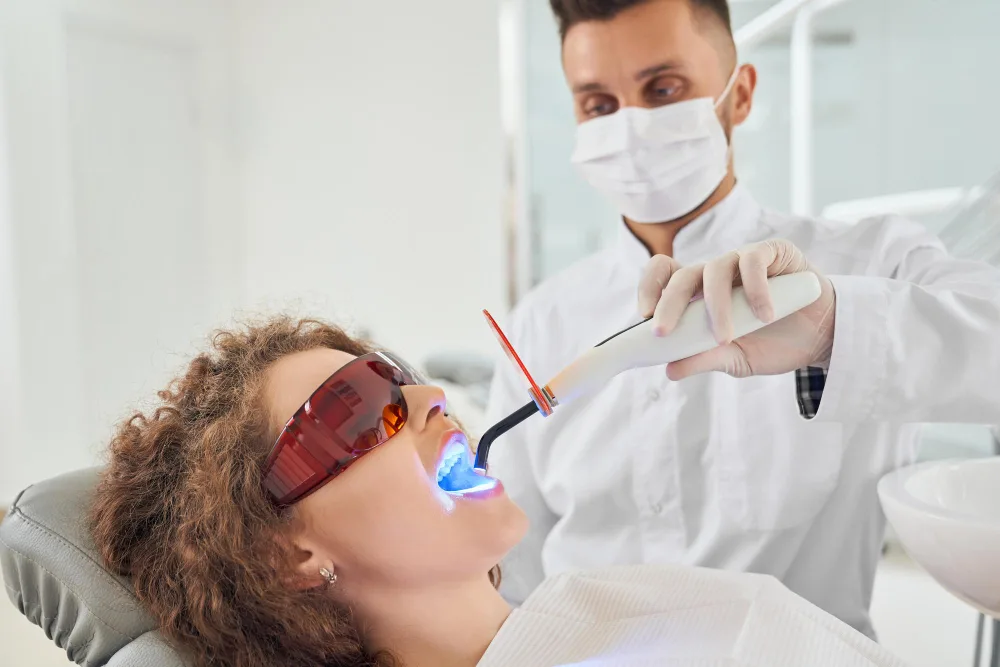
During the procedure, the dentist uses a specialized handheld laser device. The device emits a beam of light that is focused on the treatment area. The dentist carefully controls the energy level to ensure precise treatment.
When used on soft tissue, the laser can cut and seal tissue at the same time. This helps reduce bleeding during procedures. The laser also sterilizes the treatment area, which lowers the risk of infection.
When used on hard tissue such as teeth, the laser can remove decayed material without damaging healthy enamel. This makes it useful for treating cavities and preparing teeth for fillings.
Laser dentistry is often combined with digital dental tools for improved accuracy. Dentists can treat small areas without affecting nearby tissue. This level of precision helps improve patient comfort and overall treatment outcomes.
3. Types of Dental Lasers Used in Dentistry
Different types of dental lasers are used depending on the procedure being performed. Each type of laser works best for specific dental tissues and treatments.
Soft tissue lasers are commonly used for gum treatments. These lasers can reshape gums, remove excess tissue, and treat infections. They are often used in periodontal procedures and cosmetic gum contouring.
Hard tissue lasers are designed for treatments involving teeth. These lasers can remove tooth decay, prepare teeth for fillings, and even help detect cavities in early stages.
Some dental clinics use versatile lasers that can perform both hard and soft tissue procedures. These advanced tools allow dentists to complete multiple treatments with one device.
The type of laser selected depends on the dental condition, the treatment plan, and the patient’s oral health needs. Dentists receive specialized training to operate dental lasers safely and effectively.
Understanding the different types of lasers helps patients see how versatile laser dentistry can be. This technology allows dentists to perform many procedures with improved precision and patient comfort.
4. Benefits of Laser Dentistry
Laser dentistry offers several advantages compared to traditional dental techniques. One of the most noticeable benefits is improved patient comfort during procedures.
Many laser treatments require little or no anesthesia. This makes the experience less stressful for patients who feel nervous about dental visits. Laser procedures also produce less vibration and noise than traditional drills.
Another benefit is reduced bleeding during treatment. Dental lasers can seal blood vessels while cutting tissue. This helps control bleeding and creates a cleaner surgical area.
Laser dentistry also promotes faster healing. Because the laser is precise, it causes less trauma to surrounding tissues. Patients often experience less swelling and discomfort after treatment.
The sterilizing effect of laser light is another advantage. It can reduce bacteria in the treatment area, lowering the risk of infection. This makes laser dentistry a safer option for many dental procedures.
Overall, laser dentistry improves efficiency and patient experience. Many dental clinics now offer laser treatments to provide modern, comfortable care.
5. Common Procedures Performed With Laser Dentistry
Laser dentistry can be used for a wide range of dental treatments. Many procedures that once required surgical tools can now be performed using lasers.
One common use is cavity treatment. Dentists can remove decayed portions of a tooth with a laser before placing a filling. This method often preserves more healthy tooth structure.
Gum reshaping is another popular laser procedure. Dentists use lasers to remove excess gum tissue and improve the appearance of the smile.
Laser dentistry is also used to treat gum disease. The laser can remove infected tissue and reduce harmful bacteria in periodontal pockets.
Teeth whitening procedures sometimes use laser technology to activate whitening agents. This helps improve the effectiveness of cosmetic treatments.
Lasers are also used for biopsy procedures, cold sore treatment, and nerve regeneration therapies. These advanced applications show how laser dentistry continues to expand in modern dental care.
6. Laser Dentistry for Gum Disease Treatment
Gum disease is a common oral health problem. Laser dentistry provides an effective treatment option for managing this condition.
In periodontal therapy, lasers can remove infected gum tissue and eliminate bacteria from deep pockets around the teeth. This helps reduce inflammation and allows healthy tissue to heal.
Traditional gum surgery often requires cutting and stitching. Laser dentistry reduces the need for these steps. The laser seals tissue while treating the infection.
Patients who undergo laser gum treatment usually experience less bleeding and faster recovery. The procedure is also more comfortable for many people.
Laser therapy may be combined with other periodontal treatments for the best results. Dentists carefully evaluate each patient’s condition before recommending laser treatment.
With proper oral hygiene and regular dental visits, laser gum therapy can help restore healthier gums and prevent further damage.
7. Laser Dentistry for Tooth Decay
Tooth decay is one of the most common dental issues worldwide. Laser dentistry offers a modern approach to removing decay and restoring teeth.
During cavity treatment, the dentist uses a laser to remove decayed tooth material. The laser energy breaks down damaged tissue without affecting healthy enamel.
This method often reduces the need for traditional dental drills. Many patients find laser cavity treatment more comfortable and less stressful.
Laser dentistry also helps prepare the tooth surface for fillings. The laser creates a clean and bacteria-free surface that helps the filling bond effectively.
In some cases, lasers can detect early stages of tooth decay before cavities become severe. Early detection allows dentists to treat problems before they worsen.
By using laser dentistry, dentists can preserve more of the natural tooth structure. This supports long-term dental health and reduces the need for extensive treatments.
8. Laser Dentistry for Cosmetic Dental Treatments
Laser dentistry is widely used in cosmetic dental procedures. It helps improve the appearance of the smile with precision and minimal discomfort.
One common cosmetic procedure is gum contouring. Some people have excess gum tissue that makes their teeth look small. Laser gum reshaping can remove extra tissue and create a balanced smile.
Lasers can also assist in teeth whitening procedures. The laser activates whitening agents applied to the teeth, helping them work more effectively.
Another cosmetic use is treating dark gum pigmentation. Laser technology can gently remove pigmentation and restore a natural gum color.
Because laser dentistry is highly precise, cosmetic treatments can achieve more natural results. Dentists can shape tissue carefully without damaging surrounding areas.
These procedures often require little downtime. Patients can quickly return to normal activities after treatment.
9. Safety and Effectiveness of Laser Dentistry
Laser dentistry is considered a safe and effective treatment when performed by trained dental professionals. Dental lasers are approved for many procedures and have been used in dentistry for years.
Dentists receive special training to understand how lasers interact with dental tissues. This training helps ensure procedures are performed safely.
Protective eyewear is usually provided to both the patient and the dental team during laser procedures. This protects the eyes from the laser light.
Laser dentistry is designed to be highly controlled. Dentists adjust the intensity and duration of the laser beam depending on the procedure.
Studies show that laser dentistry can reduce bacteria, bleeding, and healing time compared to some traditional methods. These advantages contribute to improved patient outcomes.
However, laser dentistry may not replace every dental procedure. Dentists evaluate each case to determine whether laser treatment is the best option.
10. Recovery After Laser Dental Procedures
Recovery after laser dentistry procedures is often faster than traditional dental surgery. The precise nature of the laser causes less trauma to surrounding tissues.
Most patients experience minimal swelling and discomfort after treatment. In many cases, over-the-counter pain relief is enough to manage mild discomfort.
The laser seals nerve endings and blood vessels during treatment. This helps reduce bleeding and speeds up healing.
Patients are usually advised to follow basic post-treatment care instructions. This may include avoiding certain foods for a short time and maintaining good oral hygiene.
Because laser dentistry sterilizes the treatment area, the risk of infection is often lower. This contributes to smoother recovery and better long-term results.
Regular dental checkups remain important after laser treatment. Dentists monitor healing and ensure the success of the procedure.
11. Who Can Benefit From Laser Dentistry?
Many patients can benefit from laser dentistry. It is particularly helpful for individuals who feel anxious about traditional dental procedures.
People who require gum treatments, cavity removal, or cosmetic dental procedures may find laser dentistry more comfortable. The reduced noise and vibration can help lower dental anxiety.
Patients with sensitive teeth or gums may also benefit from laser treatments. The gentle approach often causes less irritation than conventional methods.
Laser dentistry is sometimes used in pediatric dentistry as well. Children may respond better to laser treatments because they are less intimidating.
However, not every dental condition can be treated with lasers. Dentists carefully evaluate each patient’s oral health before recommending this technology.
Consulting with a qualified dental professional helps determine whether laser dentistry is suitable for a specific treatment plan.
12. The Future of Laser Dentistry
The future of laser dentistry looks promising as technology continues to advance. Researchers are constantly developing new ways to use lasers in dental care.
Modern dental lasers are becoming more versatile and precise. This allows dentists to perform a wider range of procedures with improved accuracy.
New developments may allow lasers to treat dental infections more effectively and support faster tissue regeneration. Some research also focuses on improving cavity detection using laser technology.
As dental technology evolves, laser dentistry may become more accessible and widely available. Many dental clinics are already adopting advanced laser equipment.
Patients benefit from these innovations through more comfortable treatments and better oral health outcomes.
Laser dentistry represents an important step toward modern, minimally invasive dental care.
FAQs About Laser Dentistry
1. What is laser dentistry used for?
Laser dentistry is used for many treatments including cavity removal, gum reshaping, gum disease therapy, teeth whitening assistance, and oral tissue procedures.
2. Is laser dentistry painful?
Most laser dental procedures cause less discomfort than traditional methods. Many treatments require little or no anesthesia.
3. Is laser dentistry safe?
Yes, laser dentistry is safe when performed by trained dental professionals using approved dental laser equipment.
4. Does laser dentistry replace traditional dental tools?
Not completely. Laser dentistry can perform many procedures, but some treatments still require traditional dental instruments.
5. How long does laser dental treatment take?
The procedure time varies depending on the treatment. Many laser procedures are completed faster than traditional dental treatments.
6. Is recovery faster after laser dentistry?
Yes, recovery is often faster because laser procedures cause less tissue damage and reduce bleeding.
7. Can lasers treat gum disease?
Yes, lasers are widely used to remove infected gum tissue and reduce bacteria in periodontal pockets.
8. Are dental lasers used for children?
Yes, some dentists use laser dentistry for pediatric treatments because it can be more comfortable for children.
9. Does laser dentistry help reduce dental anxiety?
Many patients feel more relaxed during laser treatments because they involve less noise, vibration, and discomfort.
10. Can laser dentistry improve cosmetic dental results?
Yes, lasers are commonly used for gum contouring, pigmentation removal, and cosmetic dental procedures.
Take the Next Step Toward Advanced Dental Care
Modern dental technology is transforming patient care, and laser dentistry is one of the most innovative solutions available today. With improved precision, reduced discomfort, and faster recovery, laser dental treatments are becoming a preferred option for many patients.
If you want to explore advanced dental solutions and better oral health options, CureAware can help you find reliable information and connect with experienced healthcare professionals.
Start your journey toward smarter healthcare decisions today with CureAware.
Discover trusted resources, expert insights, and modern treatment options that support your long-term well-being.