




Before we get into ‘what are the main causes of obesity’, its symptoms and the health risks, let us first understand what obesity is. Obesity is a medical condition in which fat accumulates in your body in excessive amounts, which can become a precursor to many other chronic and complex diseases and can adversely affect your physical and mental health, the quality of life and self-esteem.
For control and management of obesity, it is usually calculated in terms of Body Mass Index (BMI), which is a screening tool to measure body fat by calculating an individual’s weight-to-height ratio. If the individual’s BMI is 30 or higher, they’re classified as obese.
Obesity Classifications
There are three general classes of obesity:
Class 1:
BMI greater than 30 and less than 35. Class 1 is considered to be low-risk obesity.
Class 2:
A BMI greater than 35 and less than 40 signifies moderate-risk obesity.
Class 3:
BMI equal to or greater than 40 is assessed as high-risk obesity.
Obesity Causes:
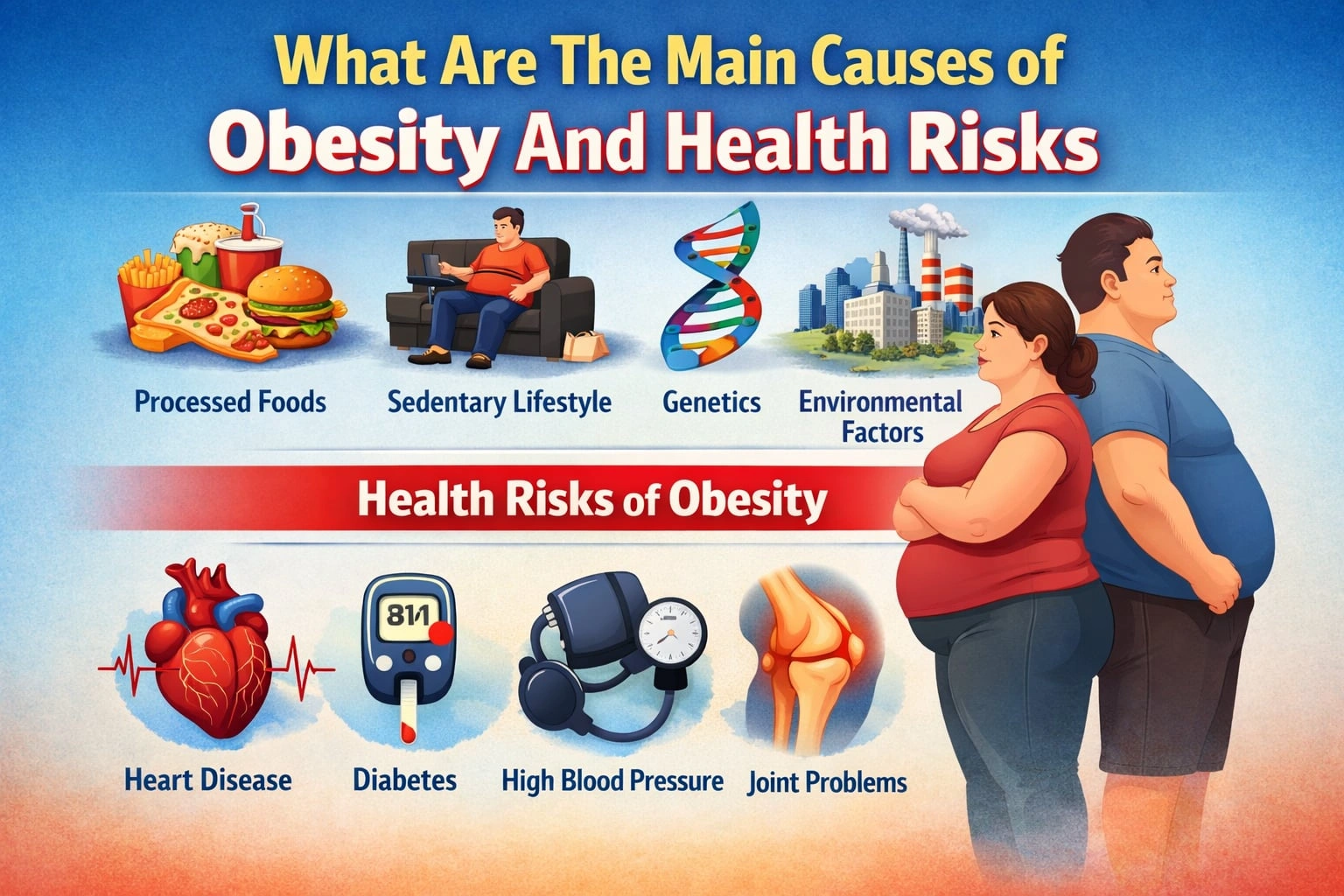
It is important to always remember that each body is unique and Obesity health problems are a complex medical condition, so the causes are equally complex, ranging from genetics to environmental and metabolic factors, often contributing to the abnormal weight gain.
Unhealthy Eating Habits
Nothing contributes to obesity like a poor diet that is rich in calories, sugars and fat. In addition, sugary drinks, fast foods and processed foods make for the perfect recipe for obesity.
Sedentary Lifestyle
Little to no physical activity considerably multiplies the risk of obesity. Lack of exercise means that the body burns fewer calories, which in turn results in obesity.
Genetics
Some individuals may have a genetic predisposition to obesity.
Hormonal Imbalances
Sometimes, hormonal imbalances may cause obesity. For instance, when the thyroid is underactive (a condition called hypothyroidism), it slows down metabolism and results in obesity.
Obesity Risk Factors:
The risk factors of obesity include:
Pre-existing Medical Conditions
- Hypothyroidism (underactive Thyroid gland)
- Polycystic Ovary Syndrome (PCOS) in women:
A hormonal imbalance that leads to weight gain. - Diabetes
Insulin resistance may contribute to body fat accumulation.
Obesity Can Lead to:
Apart from affecting a person’s confidence and causing self-esteem issues, obesity can actually become the reason for more health problems.
Cardiovascular Diseases
Obesity puts extra pressure on the workings of the heart over time, leading to various heart diseases, such as a heart attack. The excessive body fat often leads to high blood pressure, high cholesterol, and arterial plaque buildup.
Type 2 Diabetes
The more body fat accumulation around body organs, the higher the likelihood of developing Type 2 Diabetes. It is a medical condition in which the body fails to regulate blood sugar levels effectively, which often leads to serious kidney disease and even vision loss.
Sleep Apnea
Characterised by interrupted breathing during sleep and frequent waking episodes, Sleep Apnea is a common complication of obesity that can lead to high BP and heart disease.
Osteoarthritis
Being overweight puts added stress on the bodily joints, increases the chances of wear and tear in the cartilages, and often leads to Osteoarthritis. In certain cases, an individual may even require joint replacement surgery.
Obesity Management And Prevention
Here are some key factors that help manage and control obesity:
- Healthy Diet: Nothing works wonders for health than a proper diet. Consult your dietician to make a diet plan that suits your needs in managing obesity.
- Exercise Regularly: Obesity does not like movement. Exercises like callisthenics, aerobics and strength training have proven to be effective in controlling obesity.
- Stay Active: A sedentary lifestyle promotes obesity. Staying active prevents it!
Obesity Is Not The End, It’s A Wake-up Call Instead
Obesity is a massive health concern. What are the main causes of obesity? The modern-day lifestyle, with everything available at just a click, processed foods, along with genetic and environmental factors, all contribute to the rising rates of obesity across cultures and demographics. The condition is complex, but there are ways to manage it. The actions we take in terms of diet, exercise, and our psychology make a big difference. Gaining knowledge about obesity can help prevent those extra kilograms. When managing obesity, patience is a virtue and discipline works like medicine. In case lifestyle changes don’t give you the desired results, or if obesity reaches high-risk Class 3 levels, it is advisable to consult a doctor. If not addressed in time, it can lead to other serious health conditions.