
Is eczema contagious? No. Eczema, including atopic dermatitis, is not contagious. You cannot catch eczema from another person through touching, hugging, sharing clothes, using the same towels, or being in close contact. Eczema is an inflammatory skin condition associated with factors such as a weakened skin barrier, immune-system activity, genetics, and environmental triggers.
Because eczema can cause visible rashes, scaling, redness, dryness, and sometimes oozing or crusting, it is often mistaken for an infection. Understanding the difference can help reduce unnecessary worry and stigma.
Is Eczema Contagious?
No, eczema is not contagious. Eczema does not spread from person to person like a viral, bacterial, or fungal infection. You cannot get eczema by touching someone who has it, sharing personal items, or sitting next to them.
Atopic dermatitis is the most common type of eczema. The National Eczema Association and American Academy of Dermatology both state that atopic dermatitis is not contagious. It is linked to a combination of skin-barrier dysfunction, immune responses, genetics, and environmental factors rather than transmission from another person.
Why Does Eczema Look Like a Contagious Rash?
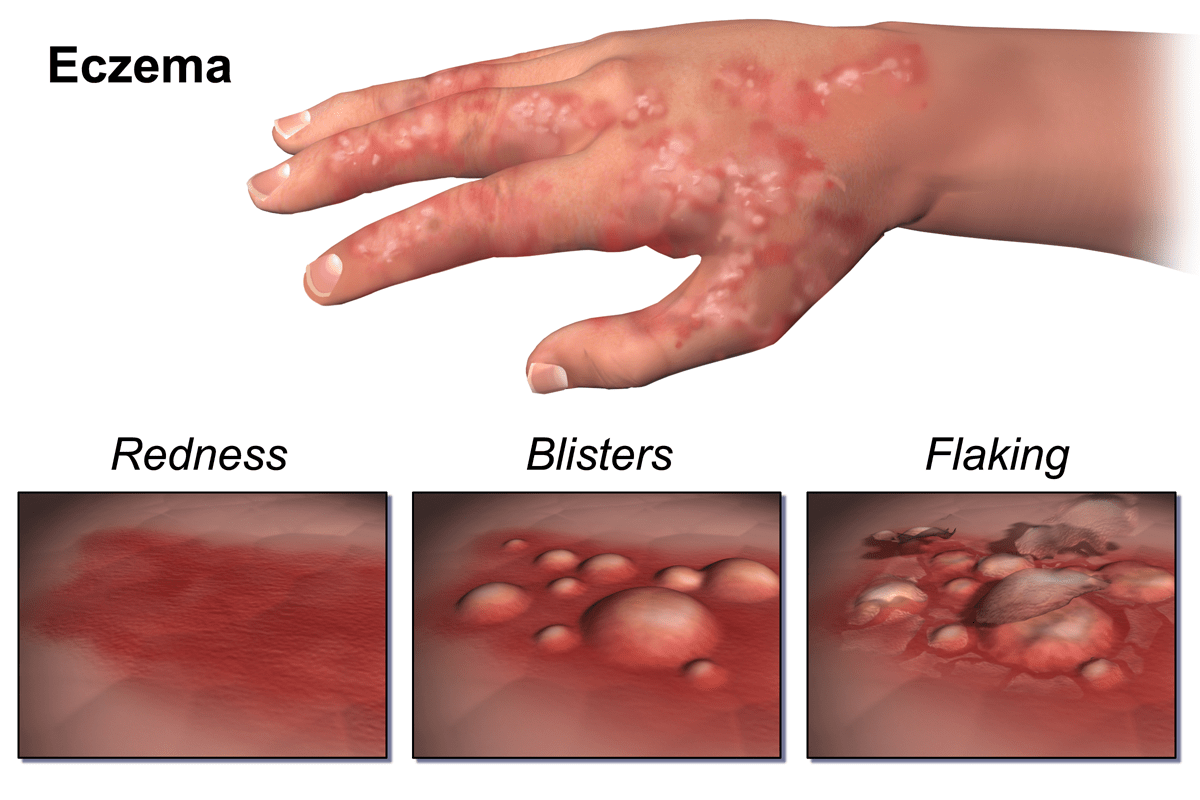
Eczema may look alarming because it can cause red, pink, purple, brown, or gray patches, dry and scaly skin, small bumps, intense itching, swelling, cracking, and sometimes fluid or crusting. These symptoms can resemble certain infections or other skin diseases.
Scratching can also damage the skin and increase the risk of a secondary infection. If eczema becomes infected, the infection itself may be contagious depending on its cause, but the underlying eczema is still not contagious.
What Causes Eczema?
There is no single cause of eczema. In many people, several factors contribute to the condition. These may include:
- Weakened skin barrier: The outer layer of the skin may not retain moisture effectively or protect against irritants.
- Immune-system activity: An overactive inflammatory response can contribute to itching and skin inflammation.
- Genetics: Some people inherit a greater tendency to develop eczema or related allergic conditions.
- Environmental triggers: Soaps, detergents, fragrances, weather changes, sweat, dust, and other irritants may trigger or worsen symptoms.
- Dry skin: Loss of moisture can make the skin more vulnerable to irritation and flare-ups.
Can You Catch Eczema From Someone Else?
No. You cannot catch eczema from another person. Normal social contact, including hugging, shaking hands, sitting together, or sharing a household, does not transmit eczema.
Eczema can run in families, but this does not mean it is passed from person to person through contact. A family history may reflect inherited susceptibility and shared environmental factors.
Can Eczema Spread From One Part of the Body to Another?
Eczema can appear in multiple areas of the body or develop in new areas during a flare, but this is not the same as a contagious rash spreading through the skin.
For example, atopic dermatitis may affect the face, hands, arms, legs, inside the elbows, behind the knees, or other areas. Scratching can irritate additional areas and worsen existing eczema, while exposure to a trigger can cause symptoms in another location.
Is Eczema Caused by an Infection?
Eczema itself is not an infection. However, eczema can make the skin more vulnerable to infections because dryness, cracking, and scratching can damage the protective skin barrier.
People with eczema may develop bacterial, viral, or other skin infections. Signs that may suggest an infection include increasing pain, warmth or swelling, pus, rapidly worsening redness, yellow or golden crusts, fever, or feeling unwell. Some infections can spread to other people, so a new or worsening rash should not automatically be assumed to be eczema.
How Can You Tell Eczema From a Contagious Skin Condition?
It is not always possible to identify a skin condition accurately from appearance alone. Eczema can resemble several infections and other inflammatory skin conditions.
A healthcare professional may consider:
- How the rash started and how quickly it changed
- Whether itching or pain is the main symptom
- The location and pattern of the rash
- Whether other people around you have developed similar symptoms
- Possible exposure to irritants, allergens, or infectious conditions
- Whether there are signs of infection
If a rash is new, rapidly spreading, unusually painful, blistering, associated with fever, or not improving with appropriate skin care, seek medical evaluation rather than assuming it is eczema.
How Is Eczema Treated?
There is currently no cure that permanently eliminates atopic dermatitis, but treatment can help control symptoms, reduce flare-ups, protect the skin barrier, and improve quality of life.
1. Moisturize Regularly
Regular use of a fragrance-free moisturizer can help keep the skin hydrated and reduce dryness. Moisturizers are an important part of eczema skin care because they help support the skin barrier.
2. Avoid Known Triggers
Common triggers can include fragranced products, harsh soaps, detergents, sweat, heat, dry air, and other individual irritants. Keeping track of flare-ups may help identify patterns.
3. Follow a Medical Treatment Plan
Depending on severity and the type of eczema, a dermatologist may recommend topical medicines or other treatments. Use prescription or over-the-counter medications according to professional guidance.
4. Protect the Skin From Scratching
Scratching can worsen inflammation and damage the skin barrier. Keeping nails short, moisturizing regularly, and following a treatment plan can help reduce the itch-scratch cycle.
Can People With Eczema Go to School or Work?
Yes. Eczema is not contagious, so people with eczema generally do not need to stay away from school, work, or normal social activities simply because they have eczema.
However, severe itching, discomfort, sleep disruption, or exposure to workplace or school triggers may affect daily activities. A practical skin-care and trigger-management plan can help people manage symptoms while continuing normal activities.
When Should You See a Doctor for Eczema?
Consider seeing a healthcare professional if you have a persistent or recurring itchy rash, symptoms that interfere with sleep or daily activities, frequent flare-ups, or a rash that has not been properly diagnosed.
Seek prompt medical attention if the skin becomes increasingly painful, swollen, warm, develops pus or significant crusting, or if you develop fever or rapidly worsening symptoms. These may indicate an infection or another condition that needs treatment.
Is Eczema Contagious? Key Takeaway
Eczema is not contagious. You cannot catch or transmit eczema through physical contact or everyday interactions. It is a chronic inflammatory skin condition influenced by factors such as genetics, the skin barrier, immune responses, and environmental triggers.
Although eczema itself cannot spread from person to person, damaged skin can be more susceptible to infections. If a rash changes suddenly, becomes painful, develops drainage or crusting, or is accompanied by fever, getting an accurate diagnosis is important.
Frequently Asked Questions About Eczema Contagion
1. Is eczema contagious through skin-to-skin contact?
No. Eczema is not contagious through skin-to-skin contact. Hugging, shaking hands, and other normal physical contact do not transmit eczema.
2. Can you get eczema by sharing clothes or towels?
No. Eczema itself cannot be transmitted by sharing clothing, towels, bedding, or other household items. Good hygiene is still important, particularly if someone has a suspected skin infection.
3. Can eczema spread by scratching?
Scratching can make eczema worse and can damage the skin, but it does not make eczema contagious or transmit it to another person.
4. Can eczema be passed from parents to children?
Eczema is not passed through contact. However, genetic factors can increase a child’s likelihood of developing eczema, particularly when there is a family history of eczema or related allergic conditions.
5. Is infected eczema contagious?
Eczema itself remains non-contagious. However, a secondary infection affecting eczema-damaged skin may be contagious depending on the organism causing it. A healthcare professional can determine whether treatment or precautions are needed.
6. Can adults get eczema?
Yes. Although atopic dermatitis often begins in childhood, adults can have persistent eczema or develop it for the first time later in life.
7. Can eczema go away permanently?
Eczema can improve substantially, and some people experience long periods with few or no symptoms. Atopic dermatitis is generally considered a chronic condition that can flare and improve over time, so ongoing skin care may be useful even when symptoms are controlled.
8. Is eczema caused by poor hygiene?
No. Eczema is not caused by being dirty or having poor hygiene. In fact, harsh soaps, frequent washing, and irritating products can worsen dry or sensitive skin in some people.
9. Should a child with eczema stay home from school?
Usually, no. Eczema is not contagious, so a child generally does not need to stay home simply because of eczema. If the child has a suspected infection, fever, significant discomfort, or another illness, a healthcare professional can advise on appropriate care.
10. How can I know whether a rash is eczema or an infection?
Because many skin conditions can look similar, diagnosis may require an examination by a healthcare professional. Rapid changes, significant pain, pus, spreading redness, fever, or other signs of infection should be evaluated promptly.
Medical Disclaimer
This article is for general health education and does not replace professional medical advice, diagnosis, or treatment. If you have a persistent, severe, infected, or unexplained rash, consult a qualified healthcare professional or dermatologist.