


Secondary Keywords (Informational Intent)
- cantilever dental bridge procedure
- advantages of cantilever bridge
- disadvantages of cantilever dental bridge
- dental bridge types comparison
- single abutment dental bridge
- cantilever bridge cost factors
- dental bridge vs implant
- how long does a cantilever bridge last
- care for dental cantilever bridge
- when is cantilever bridge recommended
Introduction
A dental cantilever bridge is not the most common solution for missing teeth. But in the right case, it can be a smart and efficient choice. Dentistry has always balanced tradition with innovation. This bridge design is one of those older techniques that still holds value today. It is simple in concept. One tooth supports another. That sounds easy, but the mechanics matter a lot.
Many people rush toward implants without questioning if they need them. That is not always the best move. A cantilever bridge can work well when used carefully. It is not for everyone. That is the truth. But when it fits, it fits beautifully.
This guide breaks everything down. No fluff. No confusion. Just clear facts. You will understand how it works, when to use it, and when to avoid it. Because oral health decisions should never be blind decisions.
1. What Is a Dental Cantilever Bridge?
A dental cantilever bridge is a fixed dental restoration. It replaces a missing tooth using support from only one adjacent tooth. Most bridges use two supporting teeth. This one uses just one. That is what makes it unique.
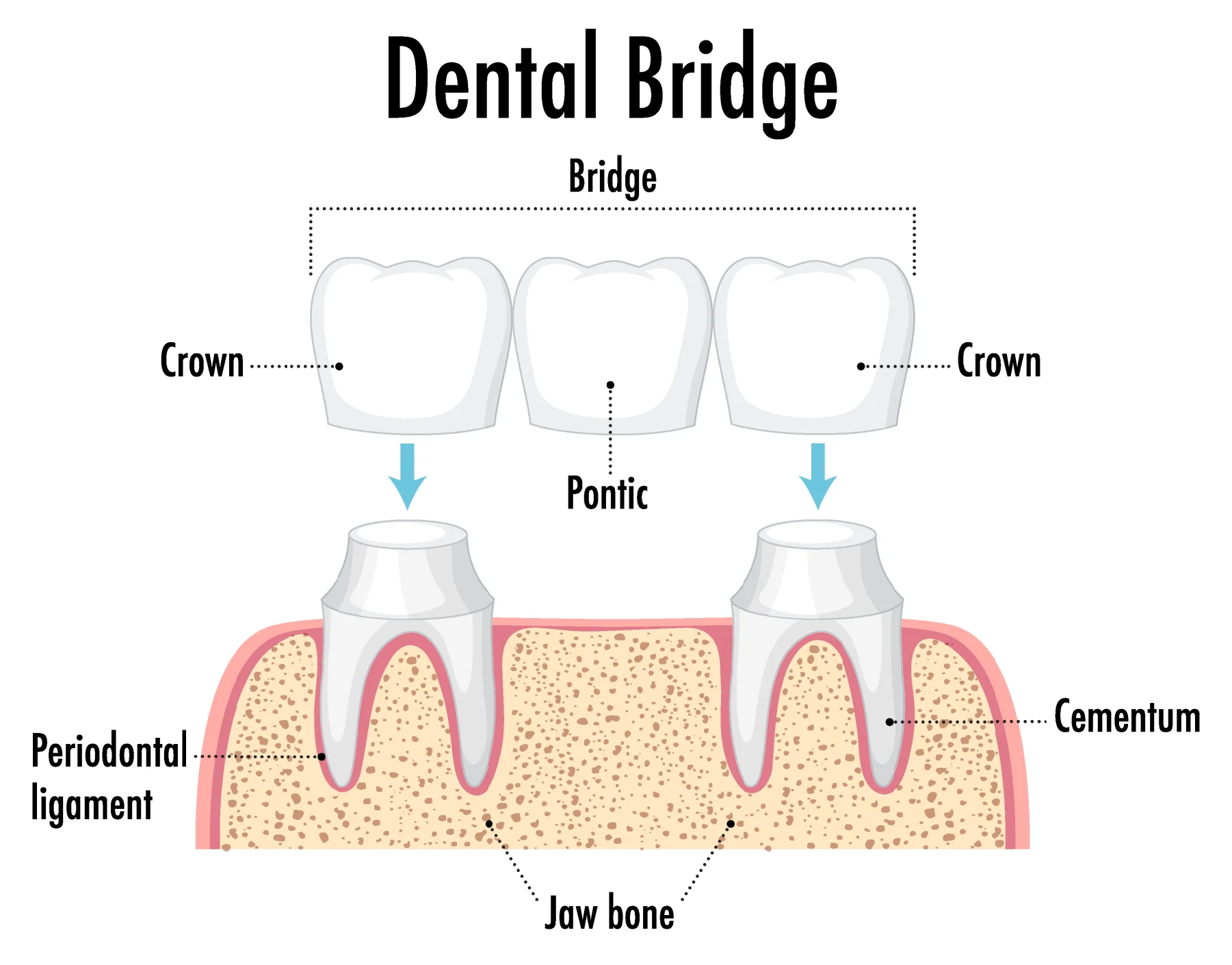
The supporting tooth is called an abutment. The artificial tooth is called a pontic. The pontic hangs off the abutment, almost like a ledge. That is where the word “cantilever” comes from.
This design works best in areas with less bite pressure. Usually, front teeth are ideal. Back teeth carry more force. That makes cantilever bridges risky in those spots.
The structure is simple. But simplicity does not mean weakness. When planned well, it can last for years. The key is proper case selection. Dentists do not recommend this blindly. They assess bone strength, bite alignment, and oral habits first.
2. How Does It Work?
The cantilever bridge works on leverage. One tooth carries the load of the artificial tooth. That creates stress. So balance is everything.
The dentist prepares the abutment tooth. This means shaping it to hold a crown. The crown will anchor the bridge. Then the artificial tooth is attached to it. The entire structure is fixed in place.
Unlike removable dentures, this does not come out. It stays in your mouth like a natural tooth. That is a big advantage.
But here is the catch. Because only one tooth supports the structure, forces must be controlled. If the bite is too strong, it can damage the abutment tooth. That is why dentists are cautious.
It is not about doing more. It is about doing what is right for your mouth.
3. When Is a Cantilever Bridge Recommended?
Not every missing tooth needs a complex solution. Sometimes, less is more. A cantilever bridge is recommended in specific cases.
It works best when there is only one adjacent tooth available. If both sides are not available, traditional bridges are not possible. That is where this option comes in.
It is also useful in front teeth areas. These areas experience less chewing force. That reduces the risk of failure.
Patients who cannot undergo surgery may also benefit. Dental implants require surgical placement. Not everyone is comfortable with that. A cantilever bridge offers a non-surgical alternative.
But dentists do not suggest this casually. They check gum health, bone support, and bite pattern first. If the conditions are not right, they will advise against it.
4. Advantages of a Dental Cantilever Bridge
This option has clear benefits. That is why it still exists in modern dentistry.
First, it requires only one supporting tooth. That preserves more natural structure. Less drilling means less damage.
Second, it avoids surgery. Many patients prefer non-invasive treatments. This bridge fits that need.
Third, it is quicker than implants. The procedure usually takes a few visits. Healing time is minimal.
Fourth, it restores appearance effectively. Missing front teeth can impact confidence. This bridge fixes that fast.
Finally, it is often more affordable than implants. Cost matters. And this option can be budget-friendly.
Still, advantages do not cancel risks. Smart decisions come from balanced thinking.
5. Disadvantages You Should Not Ignore
Let’s be real. This is not a perfect solution.
The biggest drawback is stress on the abutment tooth. One tooth carries all the load. Over time, that can lead to damage.
There is also a risk of loosening. If the bond weakens, the bridge may fail.
It is not suitable for back teeth. Chewing pressure is too high in those areas. Using it there is risky.
Another concern is long-term durability. It may not last as long as implants. That is something to consider.
Finally, improper placement can cause bite issues. That leads to discomfort and further dental problems.
So yes, it works. But only when used wisely.
6. Step-by-Step Procedure
The process is straightforward. But each step matters.
First, the dentist examines your mouth. X-rays may be taken. This helps assess bone and tooth health.
Next, the abutment tooth is prepared. A small portion of enamel is removed. This allows the crown to fit properly.
Then, impressions are taken. These are used to create a custom bridge.
A temporary bridge may be placed while waiting. This protects the prepared tooth.
Finally, the permanent bridge is fixed. The dentist checks alignment and bite. Adjustments are made if needed.
The entire process usually takes two to three visits. Simple. Efficient. Effective.
7. Cantilever Bridge vs Dental Implant
This comparison comes up a lot. And honestly, it should.
Dental implants are strong. They replace both the root and crown. That makes them durable. But they require surgery and healing time.
Cantilever bridges are less invasive. No surgery. Faster results. Lower cost.
But implants last longer. They do not rely on other teeth. That is a big advantage.
Bridges depend on existing teeth. If the abutment fails, the bridge fails too.
So what is better? It depends. Your oral health, budget, and comfort level all matter.
There is no one-size-fits-all answer. Anyone saying otherwise is oversimplifying.
8. Cost Factors to Consider
Cost is never just a number. It depends on several factors.
Material choice affects price. Porcelain, ceramic, and metal options vary in cost.
Location also matters. Dental fees differ by region.
The complexity of the case plays a role. More adjustments mean higher costs.
Additional procedures like cleaning or gum treatment can add to the total.
While cantilever bridges are generally cheaper than implants, they are not always the cheapest option.
Think long-term. Sometimes paying more upfront saves money later.
9. How Long Does It Last?
A cantilever bridge can last 5 to 10 years. Sometimes longer. But that depends on care.
Good oral hygiene is critical. Brushing and flossing daily is non-negotiable.
Regular dental visits help catch problems early.
Avoid biting hard objects. That reduces stress on the bridge.
Lifestyle habits matter too. Grinding teeth can shorten its lifespan.
So yes, it can last. But only if you treat it well.
10. Care and Maintenance Tips
Taking care of a cantilever bridge is not complicated. But it requires consistency.
Brush twice a day. Use a soft-bristled toothbrush.
Floss carefully around the bridge. Special floss tools can help.
Rinse with an antibacterial mouthwash.
Avoid sticky and hard foods. They can damage the structure.
Visit your dentist regularly. Professional cleaning keeps things in check.
Think of it like maintaining a car. Small efforts prevent big problems.
11. Common Mistakes People Make
People often assume all bridges are the same. That is not true.
Some ignore dentist advice and choose based on cost alone. That can backfire.
Others neglect oral hygiene. That leads to decay and failure.
Chewing hard foods is another common mistake.
Skipping dental checkups is also risky.
The pattern is clear. Poor habits lead to poor outcomes.
12. Who Should Avoid This Option?
Not everyone is a good candidate.
People with weak abutment teeth should avoid it. The support must be strong.
Those with heavy bite force may face complications.
Patients with gum disease are also not ideal candidates.
If multiple teeth are missing, other options are better.
In short, this is a selective solution. Not a universal one.
13. Materials Used in Cantilever Bridges
Different materials offer different benefits.
Porcelain looks natural. It blends well with teeth.
Metal is strong but less aesthetic.
Porcelain-fused-to-metal offers a balance of strength and appearance.
Zirconia is another modern option. It is durable and visually appealing.
The choice depends on location and budget.
14. Risks and Complications
Every dental procedure has risks.
Tooth fracture is one concern. The abutment takes extra load.
Decay can occur if hygiene is poor.
The bridge may loosen over time.
Gum irritation is also possible.
But most risks are manageable with proper care and planning.
15. Final Thoughts
A dental cantilever bridge is a practical solution. But it is not a shortcut.
It requires the right conditions. It demands proper care.
Old methods are not outdated. They just need to be used wisely.
If you are considering this option, ask questions. Challenge assumptions. Make informed choices.
Your teeth are not a trial experiment. Treat them with respect.
FAQs
1. Is a cantilever bridge safe?
Yes, when used in the right case and placed correctly.
2. Can it replace back teeth?
Usually not recommended due to high chewing pressure.
3. How painful is the procedure?
Minimal discomfort. Local anesthesia is used.
4. Does it look natural?
Yes, especially with porcelain materials.
5. Can it fall out?
Rare, but possible if bonding weakens.
6. Is it better than a denture?
Often yes, because it is fixed and more stable.
7. How do I clean it?
Brush, floss, and use special cleaning tools.
8. Can it damage my other teeth?
If poorly designed, yes. Proper planning prevents this.
9. How soon can I eat after placement?
Usually within a day, but follow your dentist’s advice.
10. Is it reversible?
Not fully, since the abutment tooth is modified.
A Gentle Next Step
If you are exploring solutions for missing teeth, take your time. Learn. Compare. Reflect. Platforms like cureaware can help you gather insights and understand your options more clearly. Not everything needs urgency. Sometimes, clarity is the real treatment.