

Quick answer: An eye examination for cataract is a comprehensive evaluation used to detect clouding of the eye’s natural lens, measure how much it affects vision, and check for other eye conditions that may cause similar symptoms. Depending on your symptoms and eye health, an examination may include visual acuity testing, refraction, slit-lamp examination, pupil dilation, retinal evaluation, and eye-pressure measurement. If cataract surgery is being considered, additional measurements are used to plan the artificial lens.
What Is a Cataract?
A cataract is a cloudy area that develops in the eye’s natural lens. The lens normally focuses light onto the retina so that images appear clear. As the lens becomes less transparent, vision can become blurry, hazy, less colorful, or more sensitive to glare.
Cataracts are common with aging, but they can also occur after an eye injury, with certain medical conditions, after exposure to some treatments or medicines, or for other reasons. Early cataracts may cause few noticeable symptoms, which is why regular eye examinations are important.
Why Is an Eye Examination for Cataract Important?
A cataract is not diagnosed from symptoms alone. Several eye conditions can cause blurred vision, glare, difficulty seeing at night, or changes in visual quality. A comprehensive examination helps an eye-care professional determine whether a cataract is present and whether it is the main reason for your vision problems.
- Detects clouding of the natural lens
- Measures visual acuity and the effect of the cataract on vision
- Examines the cornea, iris, lens, retina, and optic nerve
- Checks for other possible causes of reduced vision
- Provides information needed to monitor a cataract over time
- Helps determine whether treatment or cataract surgery should be discussed
The National Eye Institute notes that cataracts can be checked during a dilated eye examination, which also allows an eye doctor to look for other eye problems. Learn more about cataracts from the National Eye Institute.
Symptoms That May Mean You Need a Cataract Eye Exam
Consider scheduling an eye examination if you notice a gradual change in your vision, especially if it affects everyday activities. Common cataract-related symptoms include:
- Blurred, cloudy, or hazy vision
- Increasing glare from sunlight, lamps, or headlights
- Halos around lights
- Difficulty seeing at night
- Colors appearing faded or less vivid
- Frequent changes in your glasses prescription
- Difficulty reading, driving, watching television, or recognizing faces
- Double vision in one eye
These symptoms can also occur with other eye conditions. An examination is therefore more reliable than trying to identify a cataract based on symptoms alone.
What Tests Are Included in an Eye Examination for Cataract?
1. Visual Acuity Test
Visual acuity testing measures how clearly you can see at different distances. You may be asked to read letters or symbols from an eye chart, with and without your current vision correction. This helps establish how much your vision is affected.
2. Refraction Test
Refraction determines whether glasses or contact lenses can improve your vision. If vision remains reduced despite appropriate correction, the eye doctor will consider cataract and other possible causes.
3. Slit-Lamp Examination
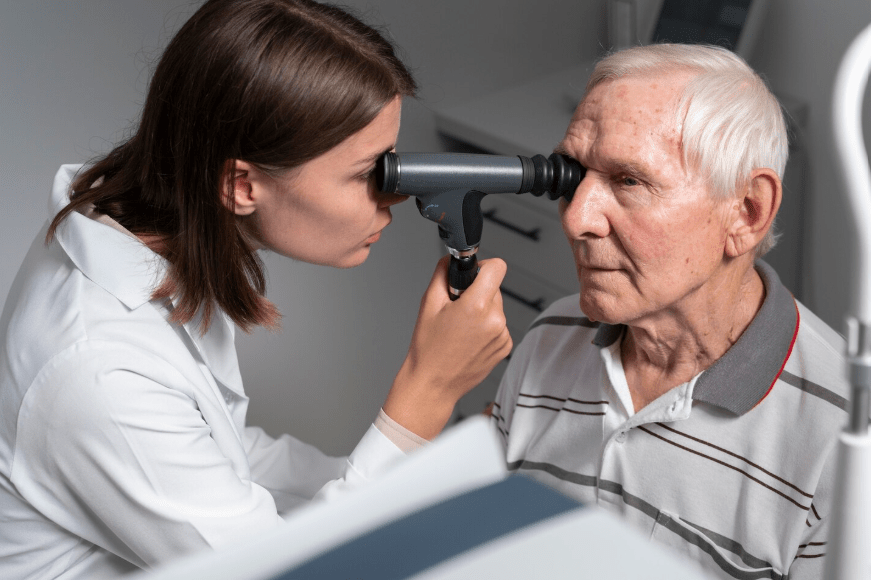
A slit lamp is a specialized microscope that provides a magnified view of the front structures of the eye. It allows the clinician to examine the cornea, iris, anterior chamber, and lens and identify the location and appearance of lens clouding. The slit lamp is an important part of evaluating cataracts.
The American Academy of Ophthalmology’s EyeWiki explains that slit-lamp examination helps evaluate the lens and characterize cataract changes, while a comprehensive examination also assesses other structures that may affect vision.
4. Dilated Eye Examination
During a dilated examination, eye drops widen the pupil so the eye doctor can see more of the inside of the eye. This can help evaluate the lens as well as the retina, macula, vitreous, and optic nerve. Dilation is particularly useful because a cataract may not be the only cause of reduced vision.
After dilation, near vision may be temporarily blurry and bright light may feel uncomfortable for a few hours. Bringing sunglasses and arranging transportation can be helpful if your doctor expects significant temporary visual effects. See the National Eye Institute’s guide to dilated eye exams.
5. Eye Pressure Measurement
Tonometry measures pressure inside the eye. It does not diagnose a cataract, but it may be included in a comprehensive eye evaluation to assess for other eye-health concerns such as glaucoma.
6. Retinal and Optic Nerve Examination
The doctor examines the retina and optic nerve to determine whether another condition could be contributing to vision loss. This is important because a person can have both a cataract and another eye disease at the same time.
7. Additional Tests Before Cataract Surgery
If cataract surgery is being considered, your ophthalmologist may perform additional measurements to calculate the appropriate intraocular lens (IOL) power. Depending on the individual case, testing may include measurements of eye length and corneal power, corneal topography, retinal imaging, optical coherence tomography (OCT), or ultrasound when the back of the eye cannot be seen clearly.
How Is a Cataract Diagnosed?
A cataract is diagnosed by examining the eye and identifying opacity or clouding in the natural lens. The doctor also considers your symptoms, visual acuity, refraction, medical history, medications, previous eye injuries or surgery, and the overall health of the eye.
The key question is not simply whether a cataract exists, but whether the cataract explains your visual symptoms and is interfering enough with daily activities to justify treatment. The American Academy of Ophthalmology describes cataract evaluation as an assessment of the lens opacity, its effect on vision and function, and whether removing the cataract is likely to improve the patient’s quality of life.
Can a Routine Eye Exam Detect Cataracts?
Yes. A comprehensive eye examination can detect cataracts, including cataracts that are not yet causing major symptoms. A dilated examination and slit-lamp assessment can provide important information about the lens and the rest of the eye.
However, a basic vision screening is not the same as a complete eye examination. If you have persistent visual changes, an eye-care professional should perform an appropriate examination rather than relying only on an eye-chart result.
When Should You Have an Eye Examination for Cataract?
The appropriate schedule depends on your age, risk factors, symptoms, medical history, and previous examination findings. People with new or worsening vision changes should arrange an eye examination rather than waiting for symptoms to become severe.
The National Eye Institute advises that adults over 60 may need dilated eye examinations every 1 to 2 years, while people with diabetes, high blood pressure, or other risk factors may need more frequent examinations based on their doctor’s advice.
What Happens If a Cataract Is Found?
Finding a cataract does not automatically mean you need surgery. If the cataract is mild and does not interfere significantly with daily activities, your doctor may recommend monitoring it and correcting refractive changes with updated glasses.
When a cataract begins to interfere with reading, driving, work, hobbies, or other important activities, your ophthalmologist may discuss cataract surgery. Surgery is currently the only treatment that removes the cloudy natural lens itself.
Monitoring
Early cataracts may be monitored during regular eye examinations. Your doctor can track changes in the lens and visual function over time.
Updated Glasses or Contact Lenses
A new prescription may improve vision when refractive error is contributing to your symptoms. Glasses do not remove a cataract, but they can sometimes improve functional vision in the early stages.
Cataract Surgery
Cataract surgery removes the cloudy natural lens and replaces it with an artificial intraocular lens. The decision is individualized and is generally based on how much the cataract affects vision and quality of life, together with the overall condition of the eye.
How to Prepare for a Cataract Eye Examination
- Bring your current glasses or contact-lens information.
- Bring a list of medicines and relevant medical conditions.
- Tell your doctor about previous eye surgery, injuries, or eye diseases.
- Write down when your vision changes started and which activities are becoming difficult.
- Tell the clinician if you experience glare, halos, night-vision problems, or double vision.
- If dilation is planned, bring sunglasses and ask whether you should arrange a ride home.
What Is the Difference Between a Cataract Test and a Regular Vision Test?
A vision test primarily measures how clearly you can see. A cataract evaluation goes further by examining the lens and other eye structures and looking for conditions that may explain reduced vision. A comprehensive examination can therefore identify cataracts even when the patient is not yet experiencing severe visual impairment.
When Is Cataract-Related Vision Loss an Emergency?
Cataracts usually develop gradually. Sudden vision changes should not automatically be attributed to a cataract. Seek urgent eye care for sudden vision loss, a sudden increase in floaters, flashes of light, a curtain or shadow across your vision, severe eye pain, or a sudden major change in vision. These symptoms can indicate a retinal or other eye emergency.
Frequently Asked Questions About Eye Examination for Cataract
1. What is an eye examination for cataract?
It is a comprehensive eye evaluation used to identify cataract-related lens clouding, measure its effect on vision, examine overall eye health, and determine whether monitoring or treatment is appropriate.
2. What is the best test for detecting cataracts?
A comprehensive eye examination, including slit-lamp examination of the lens and, when appropriate, a dilated examination, is central to cataract diagnosis. Additional testing depends on the patient’s symptoms and treatment needs.
3. Can an eye test detect a cataract before symptoms become severe?
Yes. Cataracts can be identified during an eye examination before they significantly interfere with everyday activities.
4. Can cataracts be seen during a routine eye examination?
Yes. A comprehensive eye examination can include assessment of the lens for cataract and evaluation of other structures that may affect vision.
5. Does a cataract always require surgery?
No. Surgery is generally considered when the cataract causes enough visual difficulty to interfere with daily activities or quality of life.
6. Can glasses cure cataracts?
No. Glasses can correct refractive error and may improve vision in some people with early cataracts, but they do not remove the cloudy lens.
7. Is a dilated eye examination necessary for cataracts?
Dilation can help the eye doctor examine the lens and the back of the eye more thoroughly. Whether dilation is needed depends on the clinical situation and the doctor’s examination plan.
8. Can cataracts cause problems with night driving?
Yes. Cataracts can increase glare and halos and reduce contrast or visual clarity in low-light conditions, which may make night driving difficult.
9. How often should I have my eyes examined for cataracts?
There is no single schedule that applies to everyone. The recommended interval depends on age, risk factors, symptoms, and previous examination findings. Your eye-care professional can recommend the appropriate interval.
10. When should I see an eye doctor urgently?
Seek urgent medical assessment for sudden vision loss, a curtain-like shadow, new flashes or many floaters, severe eye pain, or another sudden significant change in vision. These symptoms are not typical of a slowly developing cataract.
Tips for Long-Term Eye Health
- Keep up with comprehensive eye examinations recommended for your age and risk factors.
- Protect your eyes from excessive ultraviolet exposure with appropriate UV-protective eyewear.
- Do not smoke.
- Work with your healthcare team to manage conditions such as diabetes and high blood pressure.
- Eat a balanced diet that includes vegetables, fruits, and other nutrient-dense foods.
- Use protective eyewear during activities that could cause eye injuries.
- Discuss persistent or worsening vision changes with an eye-care professional instead of self-diagnosing.
Related Cataract Information
If you want to understand how cataracts may change over time, read our guide on how long it takes for a cataract to grow.
Key Takeaway
An eye examination for cataract does more than identify a cloudy lens. It measures visual function, examines the lens and other eye structures, looks for additional causes of vision changes, and helps your eye doctor decide whether observation, updated vision correction, or cataract treatment is appropriate. If blurred vision, glare, faded colors, or night-vision problems are making everyday activities harder, schedule a comprehensive eye examination.
Medical Sources
- National Eye Institute: Cataracts
- National Eye Institute: Get a Dilated Eye Exam
- American Academy of Ophthalmology EyeWiki: Cataract
- American Academy of Ophthalmology EyeWiki: Slit-Lamp Examination
Medical disclaimer: This article is for general educational purposes and is not a substitute for an examination, diagnosis, or treatment plan from a qualified eye-care professional.