


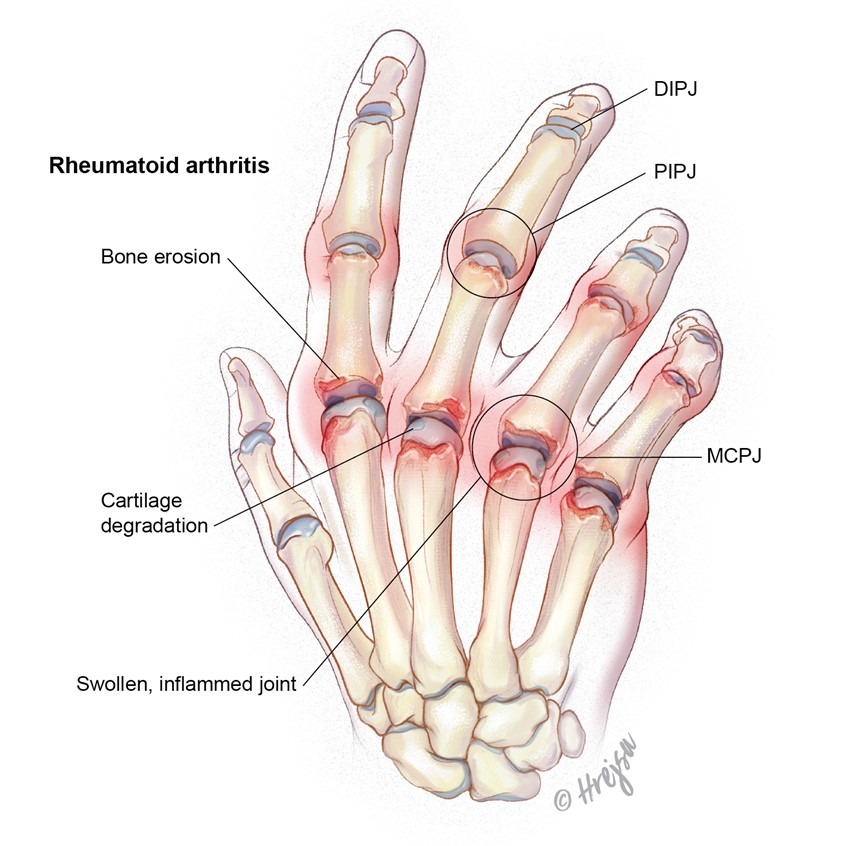
Rheumatoid arthritis (RA) is a chronic autoimmune condition that causes inflammation in the joints and can gradually affect cartilage, bone, tendons, ligaments, and joint function. If inflammation remains active for a long time, structural damage can develop and may become permanent.
So, what are the 4 stages of rheumatoid arthritis? The traditional four-stage model describes progression from early joint inflammation to advanced structural damage and, in the final stage, severe loss of joint function. The stages are commonly described as synovitis, pannus, fibrous ankylosis, and bony ankylosis. Another clinical staging approach describes the stages by the amount of damage visible on imaging. These systems overlap, but they are not identical.
Importantly, rheumatoid arthritis does not follow exactly the same timeline in everyone. Early diagnosis and effective treatment can reduce inflammation, slow or prevent structural damage, and help people maintain movement and daily function.
What Are the 4 Stages of Rheumatoid Arthritis?
The traditional four stages of rheumatoid arthritis are:
- Stage 1: Synovitis — inflammation of the joint lining begins.
- Stage 2: Pannus — abnormal inflamed tissue develops and begins damaging cartilage.
- Stage 3: Fibrous ankylosis — extensive joint damage and fibrous tissue can severely restrict movement and contribute to deformity.
- Stage 4: Bony ankylosis — advanced joint destruction can lead to fusion of the bones and major or permanent loss of movement.
These stages are a simplified way of explaining disease progression. Modern rheumatoid arthritis care also looks closely at disease activity, inflammation, symptoms, functional ability, and imaging findings rather than relying on stage alone.
Stage 1: Synovitis
The first stage begins when the immune system triggers inflammation in the synovium, the thin tissue that lines the inside of many joints. This inflammation is called synovitis.
During this stage, the joint lining becomes thicker and more inflamed. Fluid can accumulate around the joint, leading to swelling, tenderness, warmth, and stiffness. The hands, wrists, feet, and other small joints are commonly affected, and symptoms may occur on both sides of the body.
Common symptoms of Stage 1 RA
- Joint pain or tenderness
- Morning stiffness
- Swelling around affected joints
- Warmth around inflamed joints
- Reduced comfort when moving a joint
- Fatigue or a general feeling of being unwell
Early rheumatoid arthritis can sometimes be difficult to recognize because symptoms may come and go. Some people may have significant inflammation before obvious structural damage appears on a standard X-ray.
What happens inside the joint?
Inflammatory cells and signaling substances accumulate in and around the synovium. Persistent inflammation can eventually damage nearby cartilage and bone. This is why recognizing inflammatory arthritis early is important even when an X-ray does not yet show major destruction.
Stage 2: Pannus
In the second stage, ongoing inflammation causes the synovial tissue to become abnormally thickened and invasive. This abnormal tissue is often called a pannus.
The pannus can spread over the surface of cartilage and contribute to its breakdown. As cartilage becomes damaged, the smooth surfaces that normally allow bones to move easily against one another become less effective at cushioning and protecting the joint.
Symptoms that may become more noticeable
- More persistent joint pain and swelling
- Longer-lasting morning stiffness
- Reduced range of motion
- Difficulty gripping or using the hands
- Increased fatigue during inflammatory flares
- Increasing difficulty with everyday activities
Imaging may begin to show changes such as narrowing of the joint space or early bone abnormalities. Ultrasound and MRI can detect inflammatory changes that may not be visible on conventional X-rays.
Stage 3: Fibrous Ankylosis
Stage 3 represents advanced structural damage. Continued inflammation and tissue destruction can cause substantial loss of cartilage and damage to the underlying bone. The surrounding tendons, ligaments, and other supporting structures may also become affected.
As the joint becomes increasingly damaged, abnormal fibrous tissue may develop and restrict movement. This process is referred to as fibrous ankylosis.
Possible signs of Stage 3 RA
- Significant joint pain or stiffness
- Markedly reduced range of motion
- Visible changes in joint shape
- Difficulty performing fine motor tasks
- Reduced grip strength
- Difficulty walking when the feet, ankles, knees, or hips are affected
- Joint instability or deformity
Long-standing inflammation can contribute to characteristic hand and finger changes, including altered alignment of the fingers. However, not everyone with rheumatoid arthritis develops visible deformities, particularly when inflammation is controlled effectively.
Stage 4: Bony Ankylosis
Stage 4 is considered end-stage structural disease in the traditional four-stage model. Severe damage may cause the joint surfaces to become fixed together. When bone bridges or fuses across the joint, this is called bony ankylosis.
A joint affected by bony ankylosis can lose much or all of its normal movement. The extent of disability depends on which joints are affected and how extensively they have been damaged.
Possible effects of Stage 4 RA
- Severe loss of joint movement
- Major difficulty with activities of daily living
- Permanent structural changes
- Reduced strength and mobility
- Difficulty walking or using the hands, depending on the joints involved
- Long-term functional limitations
Stage 4 does not mean that rheumatoid arthritis becomes irrelevant or that treatment is no longer useful. Treatment can still focus on controlling inflammation, reducing symptoms, protecting remaining joint function, managing complications, and improving quality of life.
How Fast Does Rheumatoid Arthritis Progress Through the 4 Stages?
There is no fixed timeline for rheumatoid arthritis progression. Some people experience relatively slow structural changes, while others can develop significant damage more quickly. Disease activity, treatment response, genetics, smoking, other health factors, and how early effective treatment begins can all influence the course of the disease.
Some people may never progress through every stage. Modern treatment can significantly reduce disease activity and slow structural progression, so the traditional four-stage model should not be interpreted as a prediction that every person will eventually reach end-stage disease.
What Is the Difference Between RA Stage and RA Disease Activity?
Stage and disease activity describe different aspects of rheumatoid arthritis.
Stage generally refers to the amount of structural damage that has occurred. It is relatively focused on changes in the joints over time.
Disease activity refers to how active the inflammatory disease is at a particular point in time. Someone can have significant previous joint damage but currently have low disease activity because inflammation is well controlled. Conversely, a person with relatively little structural damage can still have highly active inflammation.
This distinction matters because treatment decisions are often based on current disease activity, symptoms, examination findings, laboratory results, and imaging rather than stage alone.
How Is Rheumatoid Arthritis Stage Determined?
Healthcare professionals may use several types of information to assess rheumatoid arthritis and determine how much structural damage is present.
Physical examination
A clinician may examine joints for swelling, tenderness, warmth, range of motion, strength, deformity, and functional limitations. They may also assess whether symptoms occur symmetrically and which joints are involved.
Blood tests
Blood tests may help evaluate inflammation and support the diagnosis. Tests can include markers of inflammation as well as antibodies associated with rheumatoid arthritis. Blood tests alone cannot determine the stage of joint damage.
X-rays
X-rays can show structural changes such as narrowing of the joint space, bone loss around joints, erosions, deformity, and advanced damage. However, early inflammatory changes may occur before substantial X-ray abnormalities become visible.
Ultrasound and MRI
Ultrasound and MRI can identify inflammation and structural changes that may be difficult to see on standard X-rays. MRI can be particularly useful for evaluating synovitis, bone marrow changes, cartilage abnormalities, and early erosive damage.
Can Rheumatoid Arthritis Progression Be Slowed?
Yes. Although rheumatoid arthritis is a chronic condition, appropriate treatment can reduce inflammation and help prevent or slow further joint damage.
Treatment plans are individualized and may include disease-modifying antirheumatic drugs, targeted therapies, symptom-relief medicines, physical or occupational therapy, exercise, joint protection strategies, and lifestyle measures. The specific approach depends on disease activity, affected joints, other medical conditions, treatment response, and individual needs.
Why Early Treatment Matters
Persistent inflammation can cause damage even when symptoms are not severe every day. Early evaluation and treatment can help control inflammation before extensive structural changes occur.
If you have ongoing joint swelling, morning stiffness, unexplained joint pain, or symptoms affecting both sides of the body, consider discussing them with a healthcare professional. Early assessment is particularly important when symptoms are persistent or interfere with normal activities.
Can Lifestyle Changes Help With Rheumatoid Arthritis?
Lifestyle measures cannot replace medical treatment, but they can support overall health and help people manage symptoms and function.
- Stay physically active: Low-impact activities can help maintain mobility, muscle strength, and cardiovascular health.
- Maintain a healthy weight: A healthy weight can reduce stress on weight-bearing joints and support overall health.
- Do not smoke: Smoking is associated with worse rheumatoid arthritis outcomes and can interfere with overall health.
- Prioritize sleep: Poor sleep can make pain and fatigue more difficult to manage.
- Use joint-protection techniques: Occupational or physical therapy can help you adapt daily activities and protect painful joints.
- Eat a balanced diet: A varied diet that provides adequate protein, fiber, vitamins, minerals, and healthy fats supports general health.
What Are the Warning Signs That RA May Be Getting Worse?
Changes that may warrant a medical review include increasing joint swelling, more frequent or severe flares, worsening morning stiffness, declining range of motion, new difficulty with daily tasks, increasing fatigue, or new visible changes in joint shape.
A worsening symptom pattern does not necessarily mean that the disease has moved to a new structural stage. It may indicate increased inflammatory activity, an additional condition, medication-related issues, or another cause. A healthcare professional can help determine what is happening.
Frequently Asked Questions
What are the 4 stages of rheumatoid arthritis?
The traditional four stages are synovitis, pannus, fibrous ankylosis, and bony ankylosis. They describe progression from joint inflammation to advanced structural damage and loss of joint movement.
Is Stage 1 rheumatoid arthritis reversible?
Early rheumatoid arthritis can often be controlled effectively, and treatment may prevent significant permanent joint damage. However, rheumatoid arthritis is a chronic condition, so ongoing monitoring and management are usually needed.
What does Stage 2 rheumatoid arthritis mean?
Stage 2 generally refers to persistent inflammation with the development of pannus and increasing damage to cartilage. Imaging may begin to show structural changes, and stiffness, swelling, pain, and reduced movement may become more noticeable.
What happens in Stage 3 rheumatoid arthritis?
Stage 3 involves advanced damage to cartilage and bone, with possible joint deformity and substantial loss of movement. Fibrous tissue may restrict the joint, and daily activities can become more difficult.
What is Stage 4 rheumatoid arthritis?
Stage 4 is traditionally described as end-stage disease in which severe joint destruction may result in bony ankylosis, or fusion of the bones across a joint. This can cause major or permanent loss of movement.
Does everyone with rheumatoid arthritis reach Stage 4?
No. Rheumatoid arthritis progression varies widely. Some people do not develop advanced structural damage, particularly when the disease is diagnosed and treated effectively.
Can rheumatoid arthritis be stopped from progressing?
There is no guaranteed way to stop progression in every person, but effective treatment can reduce inflammation and substantially lower the risk of ongoing joint damage. Regular follow-up helps healthcare professionals adjust treatment when needed.
Can rheumatoid arthritis damage occur without severe pain?
Yes. Symptoms and structural damage do not always increase at exactly the same rate. This is one reason regular monitoring can be important even when symptoms seem manageable.
When should I see a doctor about possible rheumatoid arthritis?
Seek medical evaluation if you have persistent joint swelling, prolonged morning stiffness, recurring joint pain, unexplained fatigue with inflammatory joint symptoms, or difficulty moving or using affected joints. Early assessment can help identify inflammatory arthritis and guide appropriate treatment.
Final Takeaway
The four traditional stages of rheumatoid arthritis describe a progression from synovitis to pannus formation, then fibrous ankylosis, and finally bony ankylosis. The process can involve increasing inflammation, cartilage damage, bone erosion, deformity, and loss of joint movement.
However, RA does not inevitably progress through all four stages. Modern treatment can control inflammation and reduce the risk of permanent joint damage. If you have symptoms that could indicate rheumatoid arthritis, getting evaluated early is one of the most important steps you can take.
Medical disclaimer: This article is for general educational purposes and is not a substitute for professional medical advice, diagnosis, or treatment. If you have persistent or worsening joint symptoms, consult a qualified healthcare professional.