


Binocular vision dysfunction (BVD) describes problems with how the two eyes work together to create a single, comfortable visual experience. A person may have clear vision in each eye separately but still experience headaches, eye strain, dizziness, blurred or double vision, reading difficulty, motion sensitivity, or trouble judging distance.
BVD is not one single disease with one universal cause or treatment. It is a broad term used for problems involving eye alignment, focusing, eye movements, or the way visual information is combined by the brain. Because symptoms can overlap with migraine, concussion-related symptoms, balance disorders, and other conditions, a proper eye examination is important when symptoms persist.
What Is Binocular Vision Dysfunction?
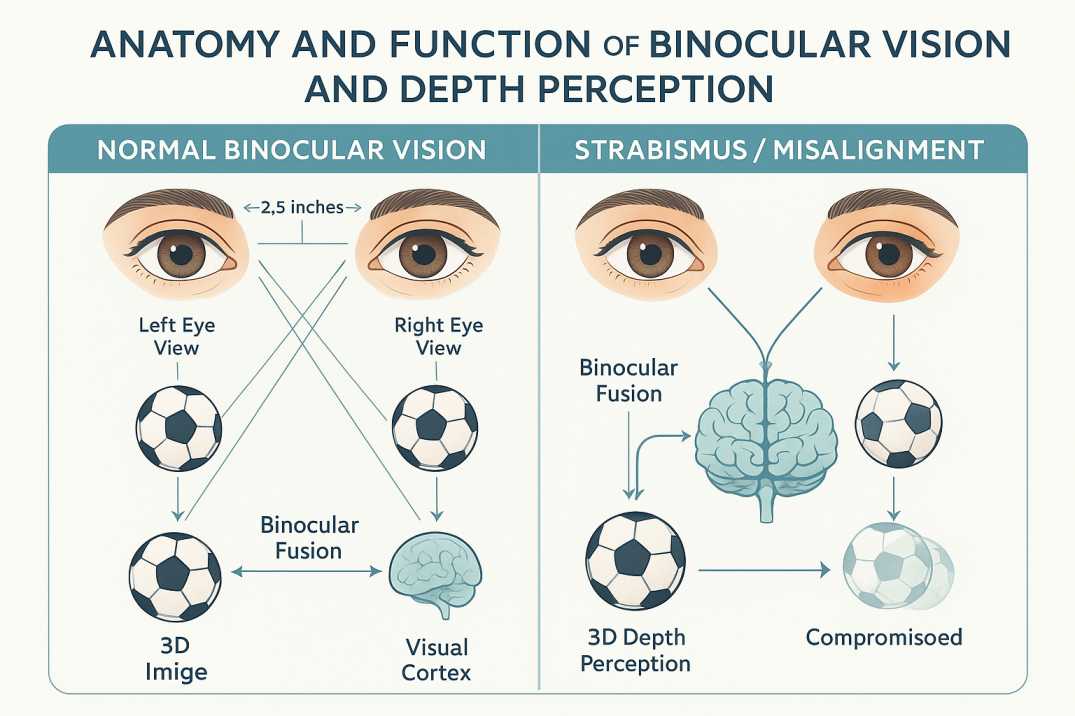
Binocular vision is the ability to use both eyes together as a coordinated team. Each eye sends slightly different visual information to the brain. The brain combines those signals to create one visual scene and helps us understand depth, distance, movement, and spatial relationships.
When the eyes do not align, focus, or move together efficiently, the visual system may need to work harder to maintain a single image. Some people compensate well and notice few symptoms, while others develop significant discomfort during visually demanding activities such as reading, computer work, driving, or walking through busy environments.
How Normal Binocular Vision Works
Each eye views the world from a slightly different position. Those two views are sent to the brain, where they are compared and combined. This process supports single vision and stereoscopic depth perception.
The eyes also need to make precise movements when you change your gaze. For example, looking from a distant object to a book requires the eyes to adjust their alignment and focusing. If those systems do not coordinate comfortably, symptoms may appear even when a standard eye chart shows good visual acuity.
Binocular Vision Dysfunction Symptoms
BVD symptoms vary depending on the underlying problem and the demands placed on the visual system. Common symptoms can include:
- Frequent or recurring headaches
- Eye strain or tired eyes
- Blurred or fluctuating vision
- Double vision
- Difficulty focusing on words or screens
- Difficulty reading for long periods
- Loss of place while reading
- Dizziness or a feeling of unsteadiness
- Motion sensitivity or motion sickness
- Light sensitivity
- Difficulty judging distance or depth
- Squinting or closing one eye to see more comfortably
- Neck, shoulder, or facial tension associated with visual effort
- Fatigue after visually demanding tasks
Having one or more of these symptoms does not automatically mean you have BVD. Many other eye, neurological, vestibular, and general health conditions can cause similar complaints.
What Does Binocular Vision Dysfunction Feel Like?
Some people describe BVD as feeling as though their eyes are working too hard. Reading may become uncomfortable after only a short time. Text can appear to move, blur, or become difficult to track. Others may feel dizzy in supermarkets, crowds, stairways, or other visually busy environments.
Symptoms may be more noticeable when the visual system is under sustained demand. Computer work, close reading, driving, sports, or rapid changes in viewing distance can expose coordination problems that are less obvious during simple visual tasks.
What Causes Binocular Vision Dysfunction?
There is no single cause of BVD. Possible contributors include differences in eye alignment, eye movement control, focusing ability, or neurological processing of visual information.
Eye Alignment and Eye Movement Problems
Small differences in the position or movement of the eyes can make it harder to maintain comfortable single vision. Some alignment problems are obvious, while others are subtle and may only become noticeable during demanding visual tasks.
Focusing and Convergence Difficulties
The eyes need to adjust both their focus and their alignment when looking at nearby objects. Difficulties with focusing or convergence can contribute to headaches, blurred vision, eye strain, and reading problems.
Head Injury or Concussion
Head injuries can affect the nerves, eye muscles, balance system, or brain processes involved in vision. Some people develop visual coordination symptoms after a concussion or traumatic brain injury. Persistent visual symptoms following an injury deserve professional assessment.
Neurological Conditions
Problems involving the brain or nerves that control eye movement and visual processing can affect binocular vision. Because neurological conditions can have many causes, new or sudden visual symptoms should not be self-diagnosed.
Can Binocular Vision Dysfunction Cause Headaches?
It can. When the eyes have difficulty coordinating, maintaining comfortable alignment may require extra effort. For some people, that visual effort is associated with headaches or pressure around the forehead, temples, or eyes, particularly after reading or screen use.
However, headaches have many possible causes. A headache should not automatically be attributed to BVD without an appropriate evaluation.
Can BVD Cause Dizziness or Balance Problems?
Visual information plays an important role in balance and spatial orientation. When the visual system is producing conflicting or uncomfortable information, some people may experience dizziness, disorientation, or motion sensitivity.
Dizziness can also result from inner-ear, neurological, cardiovascular, medication-related, and other conditions. New, severe, or unexplained dizziness should be evaluated rather than assumed to be caused by a vision problem.
BVD and Reading Difficulties
Reading requires sustained near focusing, eye teaming, tracking, and rapid shifts of attention. When these functions are not well coordinated, a person may lose their place, reread lines, experience eye strain, develop headaches, or find reading unusually tiring.
Children may appear reluctant to read or may have difficulty completing visually demanding schoolwork. These signs can have many explanations, so a comprehensive evaluation is more useful than assuming that a learning or attention problem is caused by BVD.
BVD and Screen Use
Long periods of close-up screen use can increase visual demand and may make existing focusing or eye-teaming symptoms more noticeable. Screens do not necessarily cause BVD, but prolonged near work can contribute to eye fatigue and may aggravate symptoms in people who already have a visual coordination problem.
Helpful habits include taking regular breaks, keeping text at a comfortable viewing distance, reducing glare, using appropriate lighting, and adjusting screen size and contrast for comfortable reading.
How Is Binocular Vision Dysfunction Diagnosed?
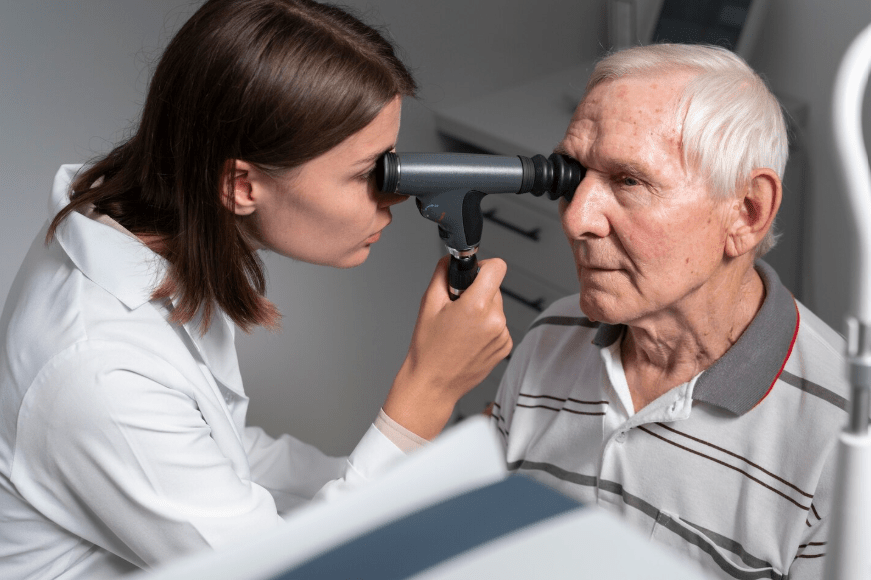
Diagnosis starts with a detailed eye and symptom history. An eye care professional may ask when symptoms began, what activities trigger them, whether one or both eyes are affected, and whether there has been an injury or other relevant health event.
The examination may assess visual acuity, eye alignment, eye movements, focusing, convergence, depth perception, and how the eyes work together at different distances. Additional testing may be appropriate depending on the symptoms and suspected cause.
A routine vision screening may not identify every binocular vision problem. Someone can have good visual acuity and still have difficulty with eye teaming or visual comfort. A comprehensive assessment is therefore important when symptoms persist despite otherwise clear vision.
Binocular Vision Dysfunction Treatment
Treatment depends on the specific problem causing the symptoms. There is no single treatment that is appropriate for everyone with BVD.
Corrective Lenses
Updated prescription lenses may help when refractive errors are contributing to visual discomfort. In selected cases, prism lenses may be prescribed to alter the path of light entering the eyes and help reduce the visual effort required for alignment.
Vision Therapy
Vision therapy uses structured activities designed to improve particular visual skills, such as eye teaming, focusing, tracking, or visual processing. Whether it is appropriate depends on the underlying diagnosis and should be determined by a qualified professional.
Treating the Underlying Condition
If binocular vision problems are associated with another eye, neurological, vestibular, or medical condition, management may need to address that underlying problem as well. Treatment should be individualized rather than based only on a list of symptoms.
Lifestyle Tips That May Reduce Visual Strain
- Take regular breaks during prolonged screen or reading sessions.
- Use comfortable, even lighting and reduce distracting glare.
- Keep reading material and screens at a comfortable distance.
- Increase text size if small text causes unnecessary strain.
- Maintain a comfortable posture while reading or working.
- Get adequate sleep and allow time for visual recovery after demanding tasks.
- Keep prescribed glasses up to date.
- Track which activities trigger symptoms and share that information during an eye examination.
These measures can support visual comfort, but they do not replace professional diagnosis or treatment when symptoms are persistent.
When Should You Seek Medical or Eye Care?
Arrange an eye evaluation if headaches, dizziness, double vision, eye strain, reading difficulty, or visual discomfort repeatedly interfere with daily activities. It is particularly important to seek assessment when symptoms begin after a head injury or when they are progressively worsening.
Sudden double vision, sudden vision loss, severe eye pain, a new neurological symptom, severe headache with neurological changes, or significant visual changes after an injury require prompt medical attention.
Frequently Asked Questions About Binocular Vision Dysfunction
What are the most common symptoms of binocular vision dysfunction?
Common symptoms include headaches, eye strain, blurred or double vision, dizziness, motion sensitivity, reading difficulty, focusing problems, and fatigue during visually demanding tasks.
Can you have BVD with 20/20 vision?
Yes. Visual acuity measures how clearly each eye can see at a particular distance, while binocular vision involves how the two eyes coordinate and how the brain combines their information.
Can binocular vision dysfunction cause anxiety?
Persistent dizziness, visual discomfort, or difficulty functioning in busy environments can understandably feel stressful. However, anxiety has many causes, so it should not automatically be attributed to BVD.
Can BVD develop after a concussion?
Yes. A concussion or other head injury can affect eye movement, focusing, balance, and visual processing. Persistent visual symptoms after an injury should be evaluated.
Is binocular vision dysfunction treatable?
Many binocular vision problems can be managed or improved, but the appropriate approach depends on the underlying cause. Options may include corrective lenses, prism lenses, vision therapy, or treatment of another condition affecting vision.
Can BVD cause double vision?
It can. Eye misalignment or difficulty coordinating the two eyes may produce double vision in some people. New or sudden double vision should be medically evaluated.
Can BVD cause motion sickness?
Some people with binocular vision problems report motion sensitivity or motion sickness, particularly when visual information and movement feel difficult to reconcile.
Can children have binocular vision dysfunction?
Yes. Children can experience problems with eye teaming, focusing, alignment, or visual processing. Signs may include reading avoidance, losing place while reading, headaches, or difficulty with visually demanding schoolwork.
Does screen time cause BVD?
Screen use is not considered a single cause of BVD, but prolonged close-up work can increase visual demand and make eye strain or existing binocular vision symptoms more noticeable.
What type of doctor diagnoses binocular vision dysfunction?
An eye care professional can assess binocular vision, eye alignment, focusing, and eye movements. Depending on the symptoms, other medical professionals may also be involved when an underlying neurological, vestibular, or systemic condition needs evaluation.
Key Takeaway
Binocular vision dysfunction can make ordinary visual tasks feel unexpectedly difficult. Headaches, eye strain, dizziness, blurred or double vision, reading problems, and motion sensitivity may occur when the eyes and brain are not coordinating comfortably. Because these symptoms have many possible causes, a comprehensive evaluation is the best way to determine whether a binocular vision problem is contributing to them.
Medical disclaimer: This article is for general educational purposes only and does not provide a diagnosis or replace professional medical advice. Seek prompt medical attention for sudden vision changes, new double vision, severe eye pain, vision loss, or neurological symptoms.