

Quick answer: Vitamin D is an essential nutrient that helps the body absorb calcium and supports healthy bones, muscles, nerves and immune function. The body can make vitamin D when skin is exposed to sunlight, and it can also come from certain foods and supplements. Vitamin D deficiency may cause no obvious symptoms, but prolonged deficiency can contribute to weak bones and other health problems. The safest way to address suspected deficiency is to discuss symptoms, risk factors and testing with a healthcare professional rather than taking high-dose supplements without guidance.
Medical disclaimer: This article is for general educational purposes and does not replace personalised medical advice, diagnosis or treatment. If you have symptoms, a medical condition, take medicines, are pregnant, or are considering high-dose vitamin D supplements, speak with a qualified healthcare professional.
Table of Contents
- What Is Vitamin D?
- What Are the Benefits of Vitamin D?
- Vitamin D Deficiency: Causes and Risk Factors
- Vitamin D Deficiency Symptoms
- Best Sources of Vitamin D
- Vitamin D and Sunlight
- Foods High in Vitamin D
- Vitamin D Supplements: Do You Need One?
- How Much Vitamin D Do You Need?
- Vitamin D Testing and Blood Levels
- Can You Take Too Much Vitamin D?
- Who May Need to Pay Special Attention to Vitamin D?
- Frequently Asked Questions
- Conclusion
What Is Vitamin D?
Vitamin D is a fat-soluble vitamin that plays an important role in maintaining normal calcium and phosphate levels in the body. These nutrients are essential for building and maintaining healthy bones. Vitamin D also contributes to normal muscle function and supports several other processes involved in overall health.
Unlike many vitamins that must mainly come from food, vitamin D has a unique relationship with sunlight. When ultraviolet B (UVB) radiation reaches exposed skin, the body can produce vitamin D. The vitamin then undergoes further processing in the liver and kidneys to become biologically active.
Vitamin D is available in different forms. Vitamin D2, also called ergocalciferol, is found in some plant and fortified sources, while vitamin D3, or cholecalciferol, is produced in human skin after sun exposure and is also available in some animal-derived foods and supplements.
Because vitamin D status depends on several factors—including sunlight exposure, skin pigmentation, age, geography, clothing, diet and certain medical conditions—two people with similar lifestyles may have different vitamin D levels.
What Are the Benefits of Vitamin D?
The best-established role of vitamin D is helping the body absorb and use calcium and supporting normal bone mineralisation. Adequate vitamin D is therefore important throughout life, from childhood growth to maintaining bone strength in older adulthood.
1. Supports Bone Health
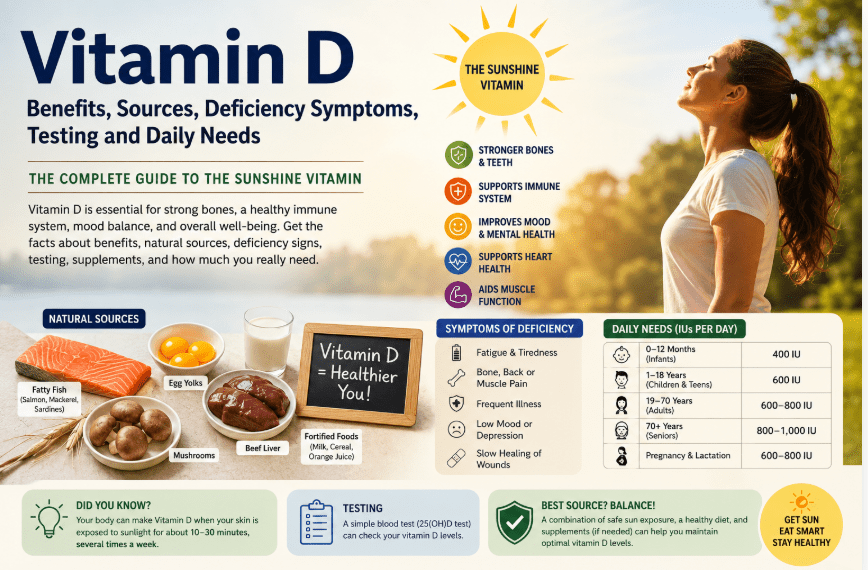
Vitamin D helps the body absorb calcium from the digestive tract. Calcium and vitamin D work together to maintain strong bones. When vitamin D is severely deficient, the body may struggle to maintain normal bone mineralisation, increasing the risk of bone problems.
In children, severe deficiency can cause rickets, a condition in which developing bones become soft and weak. In adults, severe deficiency can contribute to osteomalacia, which may cause bone pain and muscle weakness.
2. Helps Maintain Muscle Function
Vitamin D is involved in normal muscle function. Maintaining adequate levels is particularly relevant as people age, when preserving muscle strength and physical function becomes increasingly important.
However, vitamin D supplements are not a universal solution for muscle weakness. Weakness can have many causes, including nutritional deficiencies, medication effects, neurological conditions and other medical problems. Persistent or unexplained weakness should be evaluated by a healthcare professional.
3. Supports Normal Immune Function
Vitamin D plays a role in the normal functioning of the immune system. This has led to extensive research into the relationship between vitamin D status and infections. While vitamin D is important for normal immune biology, it should not be viewed as a guaranteed way to prevent or cure infections.
Evidence about vitamin D supplementation and specific illnesses varies by population and health condition. If you are considering supplements to manage a particular disease, discuss the evidence and appropriate dose with your healthcare provider.
4. Supports Overall Health
Vitamin D receptors are found in many tissues throughout the body, which is one reason researchers continue to study vitamin D and health. Research has examined possible links between vitamin D status and cardiovascular health, diabetes, mood, respiratory infections and other conditions.
However, an association between low vitamin D levels and a health condition does not automatically mean that taking vitamin D will prevent or treat that condition. Some people with chronic illness may have low vitamin D because of their underlying health status, limited mobility or other factors. More research is needed for many proposed benefits.
Vitamin D Deficiency: Causes and Risk Factors
Vitamin D deficiency occurs when the body does not have enough vitamin D to support normal physiological needs. Insufficiency and deficiency are sometimes used differently by laboratories and health organisations, so interpreting a blood test requires clinical context.
Several factors can increase the risk of low vitamin D status:
- Limited sunlight exposure: Spending little time outdoors can reduce vitamin D production in the skin.
- Higher latitudes or seasonal variation: UVB exposure can vary significantly depending on location and season.
- Darker skin pigmentation: Higher levels of melanin can reduce the skin’s production of vitamin D from the same amount of UVB exposure.
- Older age: The skin becomes less efficient at producing vitamin D with age.
- Covering most of the skin: Clothing that limits sun exposure can reduce vitamin D production.
- Malabsorption conditions: Some gastrointestinal disorders can interfere with absorption of fat-soluble vitamins.
- Kidney or liver disease: These organs are involved in converting vitamin D into forms the body can use.
- Obesity: Vitamin D can be distributed differently in people with higher amounts of body fat.
- Certain medications: Some medicines can affect vitamin D metabolism.
Having one of these risk factors does not automatically mean you are deficient. If you are concerned, a healthcare professional can determine whether testing or supplementation is appropriate.
Vitamin D Deficiency Symptoms
One of the challenges with vitamin D deficiency is that mild deficiency may not cause obvious symptoms. When symptoms do occur, they can be nonspecific and may overlap with many other conditions.
Possible signs associated with significant deficiency include:
- Bone pain or tenderness
- Muscle weakness
- Muscle aches or cramps
- Fatigue or low energy
- Changes in bone health
- In children, impaired bone development or growth-related skeletal changes in severe cases
Fatigue, low mood and general aches are common complaints with many possible causes. They should not automatically be attributed to vitamin D deficiency. A proper evaluation may include a medical history, physical examination and appropriate blood tests.
Best Sources of Vitamin D
There are three main ways to obtain vitamin D: sunlight exposure, food and supplements. The right balance depends on your age, lifestyle, location, diet, health status and individual risk factors.
Sunlight
The human body can produce vitamin D when skin is exposed to UVB radiation. However, the amount produced varies widely. Time of day, season, latitude, cloud cover, skin pigmentation, age and sunscreen use can all influence vitamin D production.
There is no single number of minutes in the sun that guarantees adequate vitamin D for everyone. Deliberately seeking excessive UV exposure can increase the risk of skin damage and skin cancer. Sun safety should therefore remain a priority.
Food
Natural food sources of vitamin D are relatively limited compared with other nutrients. Fatty fish such as salmon, trout, sardines and mackerel can provide vitamin D. Egg yolks and some animal products contain smaller amounts.
Fortified foods can also contribute significantly. Depending on the country, these may include certain milks, plant-based milk alternatives, breakfast cereals, spreads or other products. Always check nutrition labels because fortification varies by brand and region.
Supplements
Vitamin D supplements are widely available in tablets, capsules, drops and other forms. They can be useful for people who have confirmed deficiency or are at increased risk, but more is not necessarily better.
Because vitamin D is fat-soluble, excessive intake can accumulate in the body. Anyone considering high-dose supplementation should seek medical advice.
Vitamin D and Sunlight: What You Should Know
Sunlight is a natural source of vitamin D, but safe sun exposure requires balance. UV radiation can damage skin, and repeated or excessive exposure increases the risk of premature skin ageing and skin cancer.
Factors such as skin type, geographical location, season and time of day affect vitamin D production. People living in regions with strong sunlight may still have low vitamin D levels if they spend most of their time indoors or keep most of their skin covered.
It is not advisable to intentionally burn or overexpose your skin in an attempt to increase vitamin D. Use appropriate sun protection and follow local public health guidance. If you have limited sun exposure, food and medically appropriate supplementation may be alternatives to discuss with a healthcare professional.
Foods High in Vitamin D
If you want to increase dietary vitamin D, consider including foods that naturally contain vitamin D or are fortified with it.
- Fatty fish, including salmon, sardines, trout and mackerel
- Egg yolks
- Fortified dairy milk, where available
- Fortified plant-based milk alternatives
- Fortified breakfast cereals
- Some UV-exposed mushrooms
- Foods specifically fortified with vitamin D
Food labels can help you identify fortified products. If you follow a vegan, vegetarian or highly restricted diet, discuss your vitamin D intake with a dietitian or healthcare professional if you are concerned about meeting your nutritional needs.
Vitamin D Supplements: Do You Need One?
Not everyone needs a vitamin D supplement. Some people can obtain sufficient vitamin D through a combination of sunlight and diet, while others may need supplementation because of limited sun exposure, dietary restrictions, malabsorption or other risk factors.
A supplement may be appropriate when a healthcare professional identifies deficiency or recommends supplementation based on your circumstances. The dose should be selected carefully, especially if you have kidney disease, certain endocrine disorders or other medical conditions.
Do not assume that a high-dose supplement is better than a standard daily supplement. Extremely high doses can cause toxicity and may lead to dangerously high calcium levels in the blood.
How Much Vitamin D Do You Need?
Recommended vitamin D intake varies by age and by the health authority providing the guidance. For example, the U.S. National Institutes of Health Office of Dietary Supplements lists a recommended daily allowance of 600 IU (15 micrograms) for adults aged 19–70 and 800 IU (20 micrograms) for adults aged 71 and older. Other countries may use different reference values.
These recommendations are population-level guidance and are not the same as a personalised treatment dose for someone with deficiency. A healthcare professional may recommend a different amount for a limited period when treating confirmed deficiency.
When comparing supplements, pay attention to the unit. Vitamin D may be listed in international units (IU) or micrograms (mcg). One microgram of vitamin D is equivalent to 40 IU.
Vitamin D Testing and Blood Levels
The most common blood test used to assess vitamin D status measures 25-hydroxyvitamin D, also written as 25(OH)D. A healthcare professional may recommend testing if you have symptoms, risk factors, bone disease or another reason to suspect deficiency.
Laboratory reference ranges can differ, and the interpretation of a result should take your overall health into account. A single number should not be interpreted in isolation.
If you have already had a vitamin D test, ask your healthcare provider what your result means in the context of your age, symptoms and medical history. They can advise whether you need dietary changes, supplementation, additional testing or follow-up.
Can You Take Too Much Vitamin D?
Yes. Vitamin D toxicity is usually caused by excessive supplementation rather than normal food intake or ordinary sunlight exposure. Very high vitamin D intake can raise calcium levels in the blood, potentially causing nausea, vomiting, weakness, excessive thirst, frequent urination, confusion and kidney problems.
Taking more than the recommended amount without medical supervision is not a good strategy for improving health. If you use vitamin D supplements, follow the product instructions or your healthcare professional’s advice, and tell your doctor about all supplements you take.
Seek prompt medical advice if you believe you have taken a very large amount of vitamin D or develop concerning symptoms after using high-dose supplements.
Who May Need to Pay Special Attention to Vitamin D?
Some groups may have a higher risk of low vitamin D status or may require individualised advice.
Older Adults
Age-related changes can reduce the skin’s ability to make vitamin D. Older adults may also spend less time outdoors or have limited mobility.
People With Limited Sun Exposure
People who work indoors, spend little time outside, or cover most of their skin may have reduced vitamin D production.
People With Darker Skin
Higher melanin levels reduce the efficiency of vitamin D production from UVB exposure. This can be an important consideration when assessing risk.
People With Certain Medical Conditions
Conditions affecting the digestive system, liver or kidneys can influence vitamin D absorption or metabolism. People with these conditions may need medical monitoring.
People Taking Certain Medicines
Some medications can affect vitamin D metabolism. Always tell your healthcare professional about supplements and over-the-counter products you use.
Frequently Asked Questions About Vitamin D
What does vitamin D do in the body?
Vitamin D helps the body absorb calcium and supports healthy bones and teeth. It also contributes to normal muscle function and immune system function.
What are the symptoms of vitamin D deficiency?
Mild deficiency may cause no obvious symptoms. Significant deficiency can be associated with bone pain, muscle weakness and changes in bone health. Fatigue and aches can occur but are nonspecific and have many possible causes.
How can I increase my vitamin D naturally?
You can obtain vitamin D through safe sunlight exposure, vitamin D-containing foods and fortified foods. If you are at high risk of deficiency, ask a healthcare professional whether a supplement is appropriate.
Is vitamin D good for the immune system?
Vitamin D contributes to normal immune function. However, taking extra vitamin D is not a guaranteed way to prevent or treat infections, and evidence for supplementation varies by condition and population.
Can vitamin D help with tiredness?
Fatigue can have many causes. Severe vitamin D deficiency may be associated with fatigue or weakness, but tiredness alone does not prove that you need vitamin D. Consider discussing persistent fatigue with a healthcare professional.
How long does it take to correct vitamin D deficiency?
The time required depends on how low your level is, the cause of deficiency and the treatment plan. Some people may need supplementation for weeks or months, followed by reassessment. Follow your healthcare professional’s advice rather than increasing the dose yourself.
Can I get enough vitamin D from sunlight?
Some people can produce enough vitamin D through sunlight, but production varies greatly by season, location, skin pigmentation, age, clothing and other factors. Safe sun practices remain important, and sunlight should not be used as a reason to intentionally overexpose the skin.
Should everyone take vitamin D supplements?
No. Supplement needs vary between individuals. Some people may benefit from supplementation, while others may not need it. If you have risk factors or symptoms, ask a healthcare professional whether testing or supplementation is appropriate.
Conclusion
Vitamin D is an important nutrient with a central role in calcium absorption, bone health and normal muscle and immune function. The body can obtain vitamin D from sunlight, foods and supplements, but individual needs vary.
If you are concerned about vitamin D deficiency, focus on sustainable sources such as a balanced diet and appropriate sun exposure while following local sun-safety advice. People at higher risk may benefit from medical assessment and, when appropriate, supplementation.
The key is balance. Avoid assuming that every symptom is caused by low vitamin D, and avoid taking very high doses without professional guidance. If you have persistent symptoms or risk factors for deficiency, a healthcare professional can help determine whether testing is needed and recommend the right approach for your individual health.
Sources and Further Reading
- National Institutes of Health Office of Dietary Supplements — Vitamin D Fact Sheet for Consumers
- National Health Service — Vitamin D guidance
- World Health Organization — Healthy diet and micronutrient resources